
Searching Hancock County Civil Dockets
For a Hancock County civil docket search, start at Georgia Courts E-Access. The site works as a provider directory rather than a single statewide database. Hancock Superior sends searchers to PeachCourt, which requires an account first. Once you are signed in, choose Case Search. Pick the county and court. Then pull up the case by case number or party name.
- Classify the matter and identify its court from the complaint, summons, notice, or prior order.
- For Superior, follow E-Access to PeachCourt and sign in or register.
- Select Hancock and the correct court, then enter the exact case number or party name.
- Compare the court, case type, filing date, and party roles before selecting a result.
- Open the case docket and read complaint, service, answer, motion, setting, order, and judgment events.
- Call the owning clerk when a matter is absent, old, restricted, or outside proven online coverage.
The clerk publishes no official case-number mask, wildcard rule, party-name format, or public refresh schedule for the Hancock civil docket. And a login screen does not mean your search came up empty.
Hancock Superior Holds Broad Civil Cases
Hancock County Superior Court handles general civil, equity, title, real-estate, and domestic-relations cases. Clerk LeShauna R. Jackson keeps these court records at 12630 Broad Street in Sparta, and the office phone is 706-444-6644. Hours run weekdays, 9:00 a.m. to 5:00 p.m., closed holidays.
Direct answer: A divorce, broad civil action, equity claim, or title dispute normally starts with the Hancock Superior docket.
Hancock Superior sits in the Ocmulgee Judicial Circuit. A full circuit judge roster may look broad. That does not mean each judge handles every Hancock civil case. Trust the judge and setting listed on the docket or calendar entry itself.
The Ocmulgee Superior Court circuit information page adds helpful circuit context.
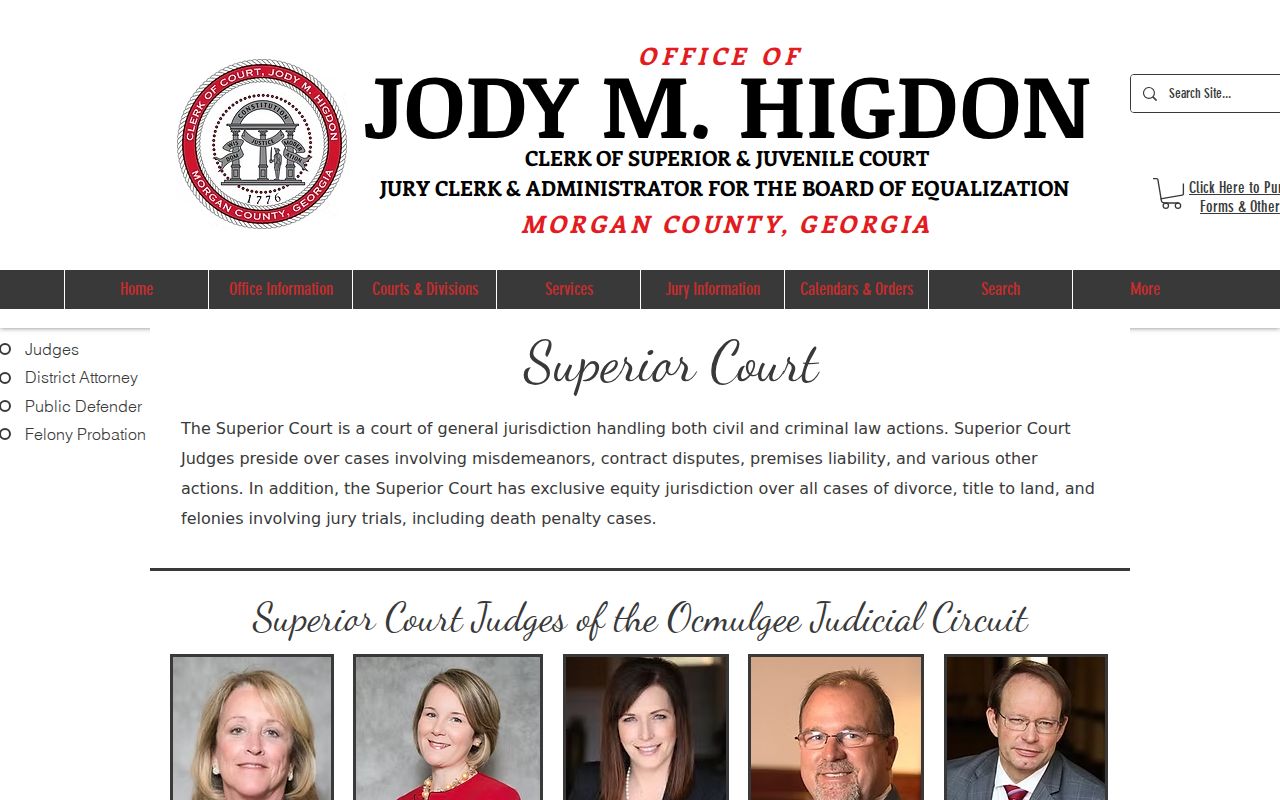
For a broader view of Hancock Superior Court's civil calendar, the official circuit source ties it to the shared judicial circuit that serves the county.
Inside a Hancock County Civil Docket
Think of a Hancock County civil docket as a dated index, one entry per event. PeachCourt's live detail view for Hancock sits behind an account login, so treat the fields here as things to confirm rather than a promise of what every screen shows. An entry may link to a document. The entry itself is still not the document.
| Header | Case number, court, filed date, case type, judge, status, and caption when shown. |
|---|---|
| Parties | Plaintiff or petitioner, defendant or respondent, and counsel roles. |
| Opening events | Complaint or petition, summons, service, return, and answer. |
| Case activity | Motions, notices, hearings, resets, discovery events, and orders. |
| Result | Judgment, default, dismissal, nonsuit, settlement-related order, or appeal entry. |
| Later activity | Garnishment, writ, satisfaction, appeal, record transmission, or remittitur. |
A filed motion is only a request. It is not a ruling, and a docket with no answer text does not prove default, so open the signed order or judgment before you describe how a Hancock County case ended.
Hancock Magistrate Handles Smaller Civil Matters
Smaller civil work in the county belongs to the Hancock Magistrate Court, which handles small claims, garnishments, dispossessory matters, bad checks, mediation, and similar lower-court cases. Georgia's statewide guide puts the small-claim ceiling at $15,000, subject to current law. The Magistrate clerk can be reached at 706-444-6234 in the same Broad Street courthouse.
| Matter | First court to check | Access route |
|---|---|---|
| General civil, equity, or title | Superior Court | PeachCourt, then Superior Clerk |
| Divorce or domestic relations | Superior Court | PeachCourt, subject to restrictions |
| Small claim or dispossessory | Magistrate Court | Phone or clerk counter; no public form found |
| Estate or guardianship | Probate Court | Probate clerk, not ordinary Superior civil search |
Hancock County has no State Court. So a civil filing will not sit there, no matter where you send the question. Check which court the pleading actually names, then watch the docket for any transfer or appeal entry that moves the case somewhere else.
Civil Case Types on the Docket
Civil court records in Hancock County split across a few court families. The Superior Court docket takes the broad civil work, including domestic relations. Magistrate Court handles the smaller civil matters the county assigns it. Estates, wills, and guardianships stay in Probate. That office keeps its own records.
- General civil claims, equity, and title disputes in Superior Court.
- Divorce and other domestic-relations matters in Superior Court, subject to privacy rules.
- Small claims, garnishment, dispossessory, and mediation matters in Magistrate Court.
- Estate, will, and guardianship proceedings in Probate Court.
- Authorized appeals or transfers that create entries in more than one court.
A file stamped “civil” is not automatically like every other civil file. Before you trust a docket search result, match the cause type to the right court. A Probate record never turns into a Superior record just because both are noncriminal.
Hancock Civil Events Form a Sequence
Read the civil docket in order: Complaint → Service → Answer → Motions → Hearing or Trial → Judgment → Enforcement or Appeal. Each step answers a different question. The complaint states claims. Service shows delivery of process. An answer responds. Motions ask for action, while signed orders show what the judge did.
Dates move. A hearing setting can be reset, continued, or changed by an amended notice. So look for the latest entry. Do not trust an older date on the calendar. A Superior trial calendar must list the place, the date, and the time. Rule 8.3 requires it. Plan trials from that published calendar. The case docket itself holds the running history of events.
After a judgment, the court docket may show further filings. These include a writ, a garnishment, a satisfaction, a notice of appeal, a record transmission, or a remittitur. None of those later filings reopens the original dispute on their own. Each one just points to a document, and that document is what you should read.
Civil Docket Settings and Hearings
Read the label on any Hancock civil setting before assuming what it is. Every label means something different. A status conference, motion hearing, pretrial conference, docket call, bench trial, and jury trial each carry their own meaning. The motion hearing takes up a request, not a ruling. Docket call usually checks whether the parties are ready. Only a trial decides the merits. So a date on the docket is not automatically a trial date.
Check the newest setting against the court notice and the current Ocmulgee calendar. Dates that conflict? Call the clerk. A pending motion to continue proves nothing by itself. The reset counts only once the judge acts. The court could also issue a new setting.
Hancock County publishes no standing daily calendar and runs no calendar coordinator line. For Superior, call 706-444-6644; Magistrate, 706-444-6234; Probate, 706-444-5343. Have the exact case number and court handy when you dial.
Hancock Civil Outcomes Need Exact Terms
Default judgment, dismissal, nonsuit, and agreed judgment are not interchangeable words. The signed judgment or order controls. A short portal status may help you locate the result, yet it can hide conditions, prejudice, costs, relief, or later enforcement.
- Judgment entered
- The court filed a judgment; read it for the operative terms.
- Default judgment
- A judgment following failure to respond or appear under the applicable process.
- Agreed judgment
- The parties' agreement became a court order.
- Dismissed
- The action ended under an order whose with-or-without-prejudice terms matter.
- Nonsuit
- The plaintiff or petitioner ended the action under the governing procedure.
- Remittitur
- An appellate result returned to the trial court for action.
Abbreviations: Hancock publishes no official list of case codes. A code that means one thing elsewhere may not carry the same meaning here, so verify with the clerk before you rely on it.
Civil Docket Access Rules
Plenty of Hancock civil docket entries are public. But statute, rule, or court order can still limit access. Domestic-relations details, sealed material, confidential personal data, and certain exhibits may be withheld or redacted. Uniform Superior Court Rule 21 governs public files, redaction, and sealing in Georgia.
The Georgia Open Records Act covers administrative records. Judicial case files follow the court's own process. For the state-law background, the Georgia Attorney General's Open Government resource lays out how open government law works.
The official law page supports careful routing to the actual custodian rather than treating every judicial file as a generic agency request.
The Attorney General also publishes request guidance on custodians, lawful fees, and written denials.
The state's open-records page tells requesters to describe the record they want and name the office that keeps it. A vague ask to the wrong clerk slows any Hancock County docket search down.
Hancock Civil E-Filing Is Not Open Search
Georgia's e-file provider directory lists Hancock Superior Court as mandatory through PeachCourt. That mandate binds attorneys who file. It does not open the docket to anonymous browsing, since case lookup stays account-based and document entitlement or price can differ from docket visibility.
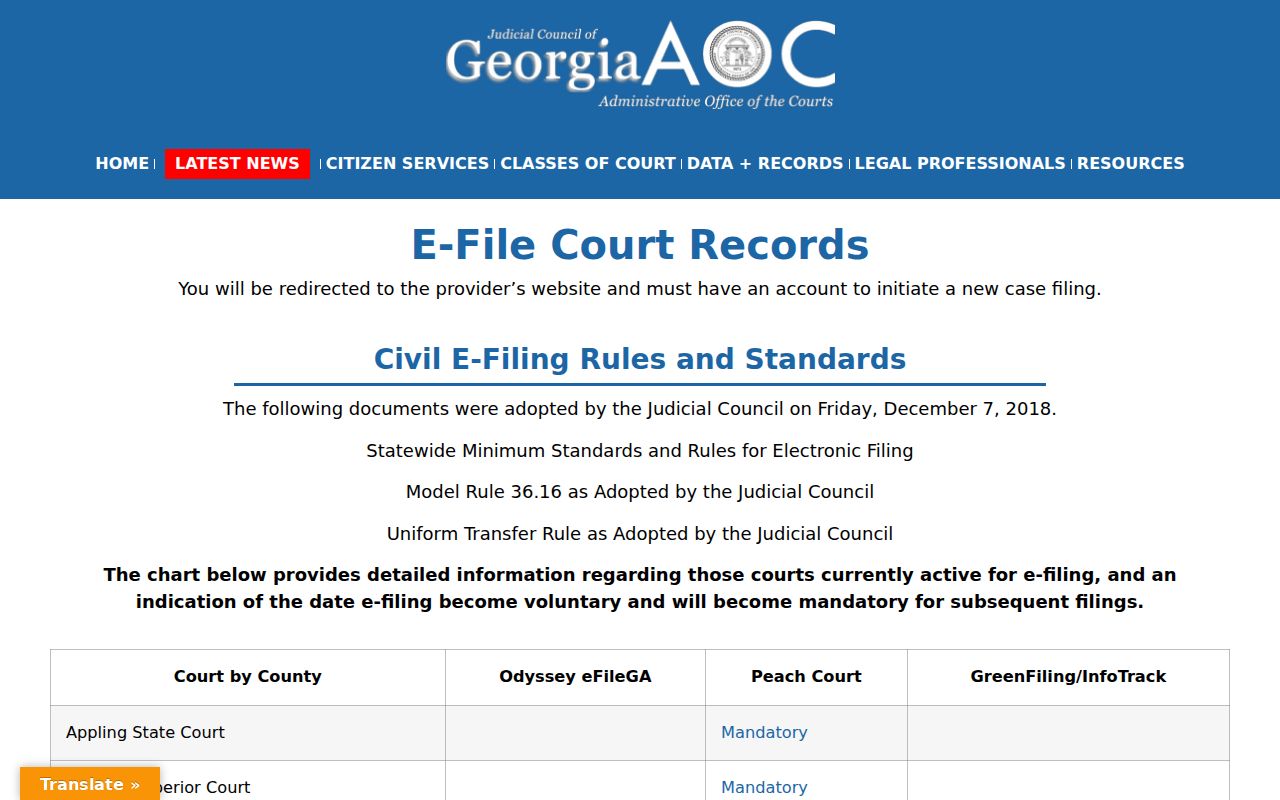
The state directory ties Hancock County civil e-filing to PeachCourt while drawing a firm line between filing access and public case access. PeachCourt does offer a case search. You can query it by county, court, case number, or party. A separate filing history shows Accepted, Rejected, and Pending tabs for a user's recent filings. That work list is not the full public case docket.
Hancock Civil Documents and Certified Copies
Think of the docket as the index. The document is the thing it points to. A complaint, an order, a judgment, an exhibit, each sits behind a docket entry. Courts and other official bodies need the real thing. In that situation, you ask the clerk for a certified copy. A docket entry pulled from the screen is not a certified judgment.
PeachCourt may show document images. But access turns on your account, your filing role, the case type, and the fee. Hancock Superior also takes part in GSCCCA eCertify. For older, paper, restricted, or unscanned files, call the clerk who created them. Ask for the document name and case number. Add the filing year, page count, copy type, seal, payment, and delivery method.
Once you have the case located, the Hancock County court record search route walks through a detailed document request. Lower-court copies must come from the lower-court custodian.
Note: Confirm current charges and processing time because Hancock does not publish a complete local civil-copy schedule or archive form.
Hancock Civil Workload Needs Care
Published Ocmulgee figures cover the full eight-county circuit, not Hancock alone. Treat the workload assessment's civil averages as circuit-wide context, never as local filing totals. For a county export, use Georgia's official dashboard, keep its self-reported-data warning in mind, and rely on the case docket for facts about one action.