
Getting Hancock County Court Records
Go to the right court first. LeShauna R. Jackson wears two hats. As Clerk of Superior Court and Juvenile Court, she holds the Hancock County Superior Court felony, domestic-relations, general-civil, real-estate, and Juvenile files. Magistrate Court keeps its own lower-court civil and criminal records. Probate Court holds estates, guardianships, wills, licenses, and Probate traffic files. Sparta Municipal Court retains city ordinance and municipal traffic cases. Sharing one courthouse address does not make these collections interchangeable.
Superior Court users can sign in to PeachCourt. Then ask the clerk for any image that is unavailable or gated. Requests can also start at the proper counter or by phone. Confirm mail, email, and fax instructions before you send anything. Hancock posts no mail-copy protocol. Official sources list conflicting fax numbers. The custodian or the normal route may be unclear. In that case, a narrow Georgia Open Records Act request can help.
- Identify the court, case number, party name, and filing year.
- Choose a docket, filed image, transcript, plain copy, or certified copy.
- Search PeachCourt for Superior Court or contact the lower court.
- Confirm page count, access, current fees, payment, and delivery.
- Keep the request date and verify the copy with its clerk.
Three Hancock Court Record Products
A docket is the chronological index. It shows a complaint, motion, order, setting, or disposition was entered. It tells you when the clerk recorded it. A filed document is the image behind an entry. That image is the pleading, order, judgment, or exhibit itself. It may sit unscanned, restricted, account-gated, or priced by the page. A certified copy is different. The clerk authenticates it for formal use, so it carries weight no printout can match.
Docket: the event list for a case.
Filed image: the actual paper or PDF behind an entry.
Certified copy: a clerk-backed reproduction with certification or seal.
The GSCCCA services overview shows the electronic service layer available through Georgia clerks.
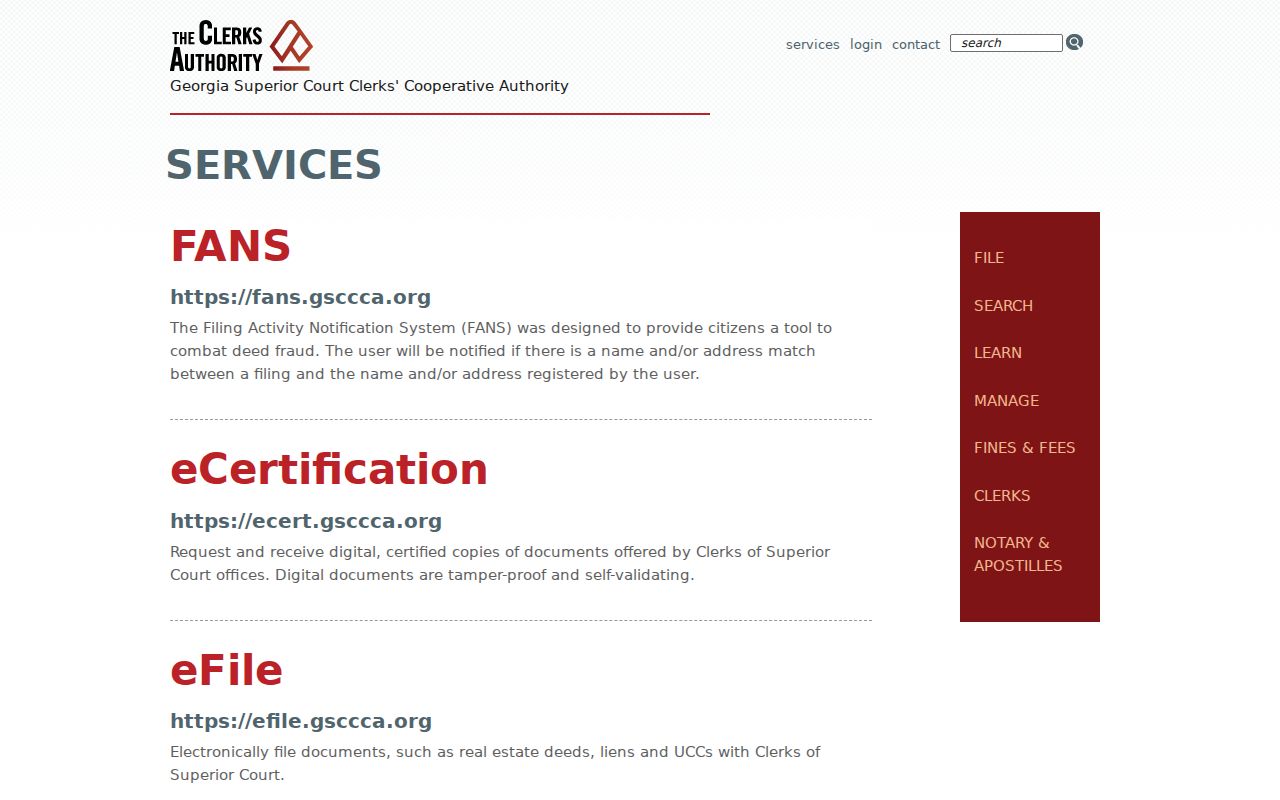
Those services supplement the Hancock County custodian rather than replace it, and they never merge every court file into one system.
Hancock County Court Record Types
Each Hancock County court keeps its own case types. Superior Court files range wide. They can include civil complaints and answers, felony filings, domestic-relations pleadings, motions, judgments, and orders. The Superior clerk administers juvenile files too, but strong access limits apply there. Magistrate records cover many lower-court matters. These include lower-value civil claims, dispossessory matters, garnishments, bad checks, warrants, bonds, and criminal preliminaries. Probate records hold estates, guardianships, wills, licenses, involuntary commitments, and Probate traffic. Municipal records cover Sparta ordinances and city traffic.
Some items sit outside an ordinary case file altogether. A hearing transcript comes through the court reporter, not the clerk's routine pages. A police narrative belongs to the agency that issued it. Real-estate and lien records may live in clerk systems. They are no substitute for a court docket. Name the exact product you want so the custodian can route and price the request.
Hancock eCertify Record Requests
Hancock County Superior Court takes part in GSCCCA eCertify. The service handles sign-in, registration, a document-request route, and document-code verification. Prices and the request menu sit behind an account. The Superior clerk decides which records are available there. Check the live cost and terms before paying. The official eCertify portal is the direct electronic route, and the page there shows what each request costs and which terms apply.
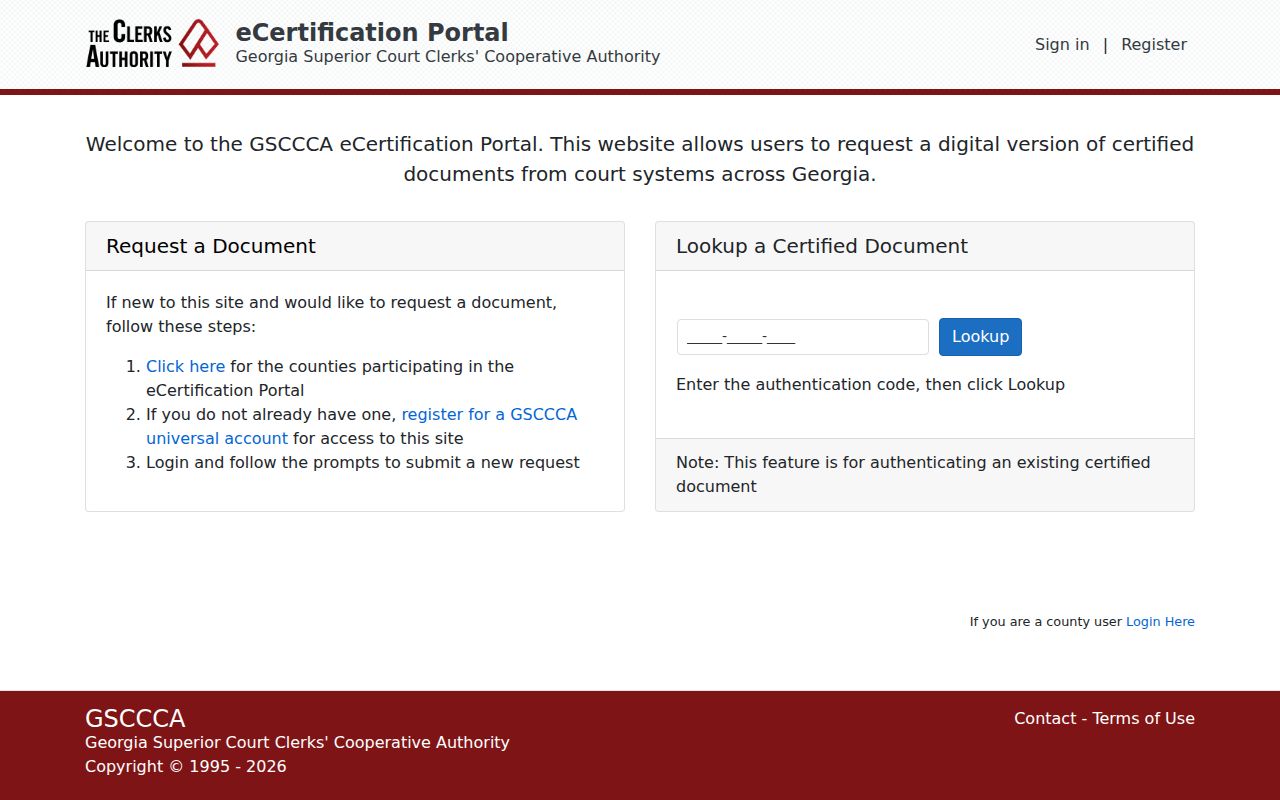
An electronic certificate carries weight beyond the text you can see on a downloaded page. It verifies that the court record copy is authentic. The participating-county list confirms Hancock County Superior Court.
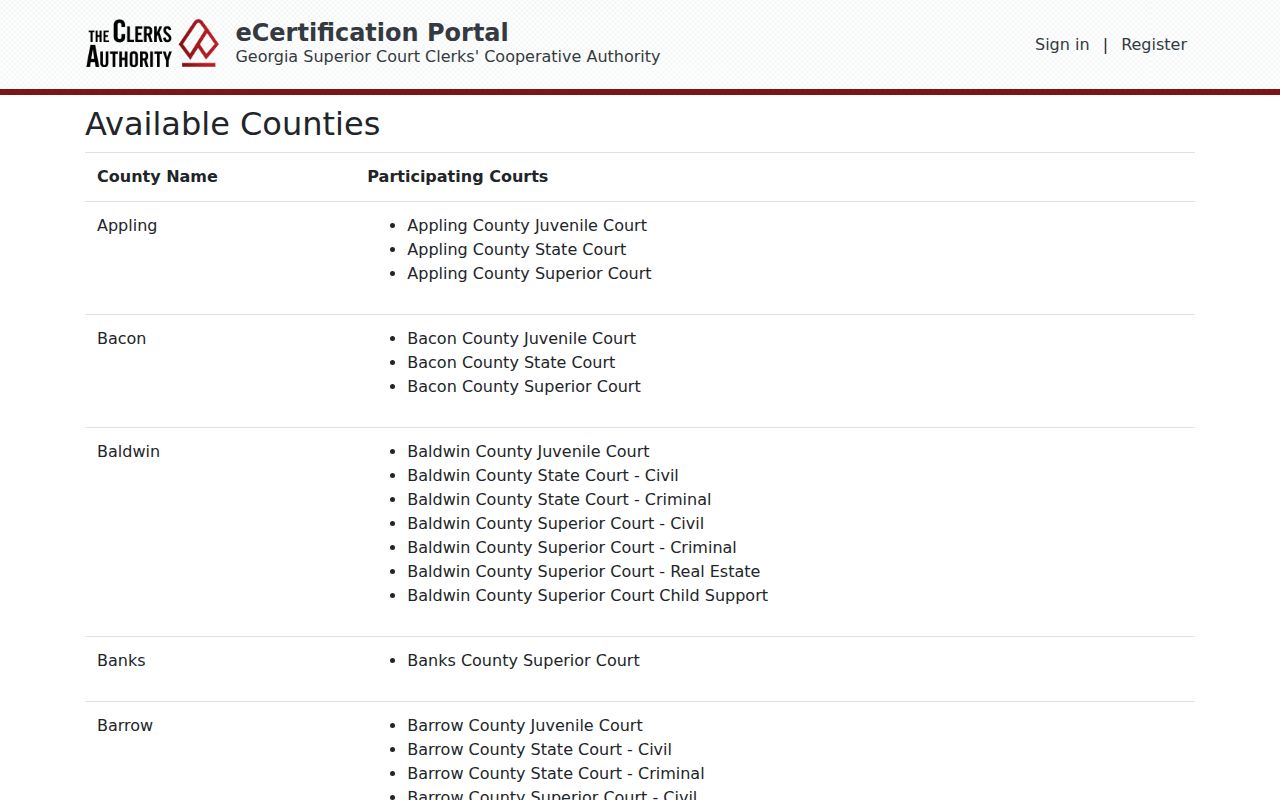
Even so, participation does not guarantee that every older, sealed, or case-specific court record can be ordered through the site.
Inside a Hancock County Court Record
A case file and its docket go hand in hand. The docket gives you the order of events; the file holds the papers behind them. PeachCourt requires an account, so judge the local formatting from the case you pull rather than from a sample.
| Case identity | Case number, court, caption, parties, and case type when public. |
|---|---|
| Docket events | Filing, service, motion, setting, order, and disposition entries. |
| Pleadings | Complaints, petitions, answers, indictments, motions, and responses. |
| Orders | Signed rulings, judgments, sentences, and court directives. |
| Access status | Public, unscanned, redacted, restricted, or sealed. |
One caution: a filing date is not always the day something happened. A hearing on the calendar is a setting, not a result. Use the Hancock County Case Lookup to find the case first, then order the document image.
PeachCourt Hancock Document Fees
PeachCourt hosts the Hancock Superior Court docket behind an account login. For a manual or criminal document, the numbers come from the provider's help. A $2 eAccess fee applies. So do $0.50 per page, 3.5 percent, and a $0.30 convenience fee. Some qualifying civil e-filings cost nothing. That break applies to the eFiler of record. One price never fits every public user or every file.
The checkout screen shows the live total before you commit. Keep two layers apart: the docket entry and the document image. An event can sit on the docket. Its image may still need payment, clerk approval, or a trip to paper. If a file turns up missing, ask the clerk. It may live in old paper, a bound volume, microfilm, unscanned images, a restricted record, or another Hancock court's case file.
Fees and Certified Copies
Georgia law sets statutory baselines for Superior Court copies. But Hancock County publishes no local fee schedule and no certified-copy form of its own. Call first. Confirm the total cost, accepted payment, pickup or mail options, and turnaround time. Do it before you send any funds. And remember that Superior Court fees do not transfer to Magistrate, Probate, or Municipal records.
| Superior Court item | Baseline |
|---|---|
| Plain page, no clerk help | $0.50 per page |
| Plain page with help | $1.00 per page |
| Electronic or fax copy | $2.50 first page; $1.00 added page |
| Certified or exemplified copy | $2.50 first page; $0.50 added page |
| Certificate or court seal | $1.00 each; confirm bundling |
Superior and Juvenile Clerk
12630 Broad Street
Sparta, GA 31087
(706) 444-6644
Monday through Friday, 9:00 a.m. to 5:00 p.m., except holidays
Hancock Open Records Form Fields
The Attorney General's model Open Records form is thin on court details. It wants a date, a recipient, fax and email, a description of the record, and your name and contact information. Notice what is missing. There is no box for a case number, no copy-type checkbox, no payment field, no document list. You supply those details yourself. For a Hancock court, add the case number, the filing year, the court, and the document name. Include the copy type you want and how delivery should reach you.
Official guidance promises a response or an estimate within three business days. It allows lawful search, copying, and redaction costs. It also lists exemptions that can justify withholding. That is a heavier route than a simple clerk request. When you know the court and the file, ask that clerk first.
Sealed Records and Public Access
Do not assume every record image is online. Georgia Uniform Superior Court Rule 21 starts from the opposite premise. Court records are public unless a statute or a sealing order says otherwise. The same rule covers sealing motions and the redaction of sensitive data. Juvenile files, adoptions, certain mental-health matters, and other confidential categories can all be restricted. And a visible docket entry changes nothing there. A clerk still cannot hand over a sealed image. Its entry showing on the docket does not matter.
Key rules: Georgia Uniform Superior Court Rule 21 addresses public files, redaction, and sealing. The Georgia Open Records Act provides a request framework, while court access rules still govern the case file.
If an image is withheld, ask which it is: sealed, confidential, unscanned, or simply not offered through that portal. Getting past the public record may take a court order or another process entirely.
Older Hancock County Court Records
PeachCourt is not a promise that every old case has a full digital image set. Historic material can live on in bound dockets, loose paper, microfilm, or later scans. The court publishes no archive schedule and no public-terminal policy. So ask the clerk directly. Give a date range, party names, the court, and the likely record type. Then ask what format survives. Older files take that kind of legwork.
Federal records sit on a separate shelf. Hancock lies in the Macon Division of the U.S. District Court for the Middle District of Georgia. Federal appeals go to the Eleventh Circuit, never to Hancock Superior Court.
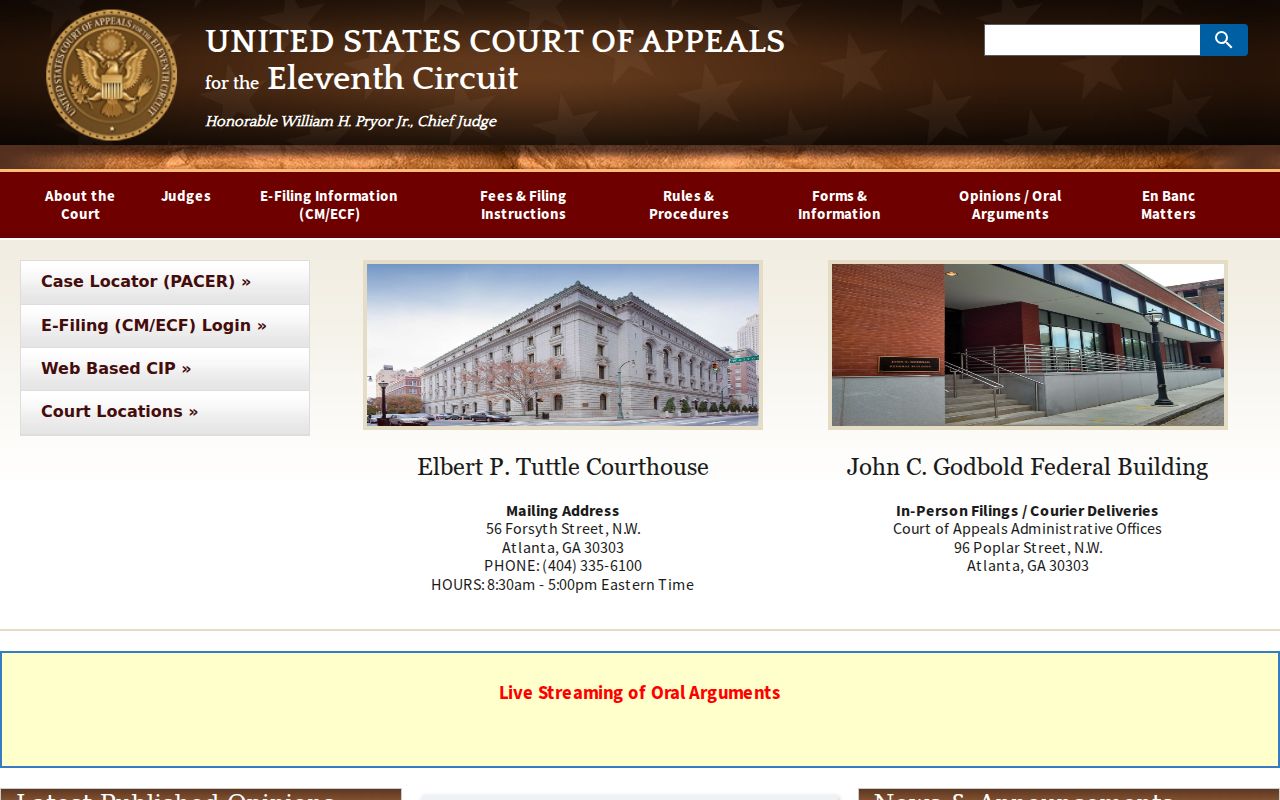
The distinction matters when the same party appears in both state and federal cases.